June 2, 2026
Book Review: 10 to 25: The Science of Motivating Young People
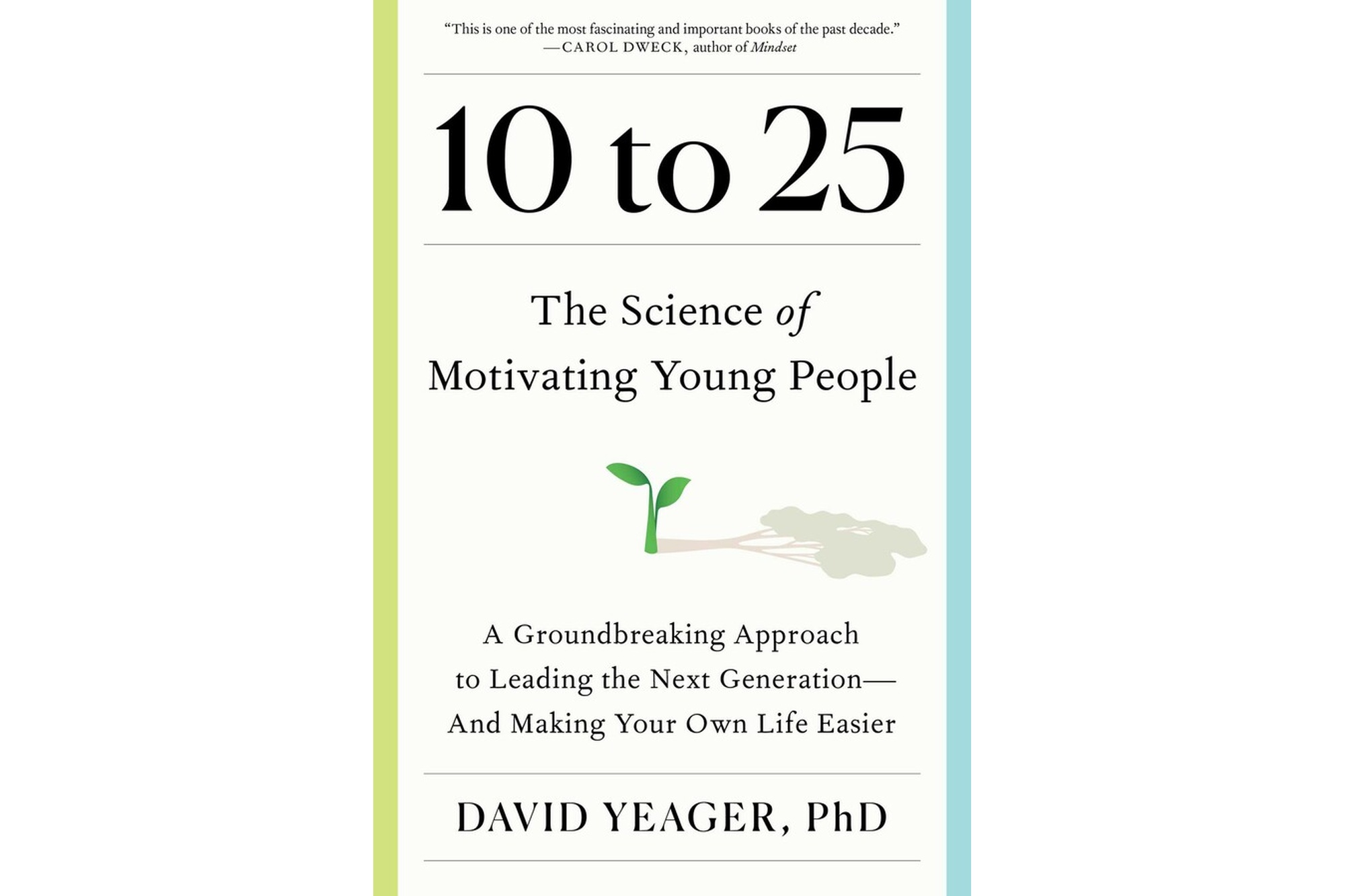
I loved this book! I have been working in the field of education for more than ten years, and one thing has always perplexed me: no matter how much effort went into the work (the vaping interventions, the consent workshops, the “don’t share intimate pictures online” talks, etc.), I could never be certain any of it was actually landing. I had models, frameworks, and the right structures. What I didn’t have was an answer to the question that followed me out of every room: “How do I actually get through to them?” Reading David Yeager’s 10 to 25: The Science of Motivating Young People, I realized why. I had been thinking about teenagers all wrong, and my students deserved the version of me that had read this book. Honestly, this should be mandatory reading for anyone who works with young people.
In 10 to 25, Yeager gets to the science early, describing the neurobiological-incompetence model: the assumption that teenage behavior is simply the product of an unfinished brain, that young people struggle to control their impulses or make sound decisions because the relevant parts of the brain (what scientists call executive functions) haven’t fully developed yet. It sounds very scientific, but what is striking about the way Yeager unpacks this concept is how practical and down-to-earth it is: he is not writing for academics, he is writing for the people in the room. And what he shows is that we have dramatically overstated it. The most powerful driver of young people’s behavior isn’t their developmental stage; it’s whether the adults around them treat them as already capable of good judgment. Our greatest living philosopher, one Taylor Swift, puts it plainly: “When you are young, they assume you know nothing.” And teenagers know it. So, they apply the same model right back at us: we, the oldies, misunderstand their music, their humor, their language, their whole way of moving through the world.
But the dismissiveness runs in both directions. What Yeager argues, carefully and convincingly, is that someone has to go first. If you are the adult in the room, that someone is you. If you work with young people aged 10 to 25, you need to read this book (I can’t stress this enough). It is full of practical, grounded strategies for doing the hardest thing in that work: convincing a young person that you actually have their interests at heart. That is not a soft skill. It is a craft, and Yeager treats it as one. The stories he includes are told with real compassion, and they make clear that the adults who get this right are not doing something magical; they are doing something learnable. If you also feel like nothing is getting through, read this book: not because it will reassure you, but because it will redirect you firmly but compassionately.
Reading this book helped me notice the moments when my own thinking slides into a quiet “those youths” energy: impatient, slightly superior, already checked out. Yeager’s great gift is making you recognize that that is not a teenager’s problem, but our problem. And that is one issue we are actually equipped to solve.

Frequently asked questions
At its core, 10 to 25 is a book about why so many adults who genuinely care about young people still struggle to reach them, and what the science says about closing that gap. Yeager, a developmental psychologist at the University of Texas at Austin, draws on decades of research to argue that motivation in young people isn't a fixed trait but a response to context. Specifically, whether they feel respected. The book moves between research findings and real stories, and manages to be both rigorous and readable. It is aimed at anyone who works with young people between the ages of 10 and 25, but readers consistently report that it reframes their own adolescence as much as their current relationships with young people.
Yeager's research points to something most adults don't expect: teenagers are extraordinarily sensitive to whether the adults around them genuinely respect their perspective. When they sense they don't, they disengage. Not out of defiance, but out of a rational calculation that the interaction isn't worth the effort. What looks like indifference is often a response to feeling dismissed. The adults who break through that pattern, Yeager shows, aren't doing something magical or charismatic. They're doing something specific and learnable: they signal respect before asking for effort.
No. Yeager writes for practitioners, not academics. The research is there, and it's solid, but it's always in service of a practical question: what does this mean for how I show up in the room? Teachers, coaches, counselors, and parents are the intended audience, and the book reads accordingly. If anything, readers with no psychology background often report finding it more revelatory, precisely because nothing they're reading confirms what they already knew.
SHARE THIS ARTICLE VIA

Related Articles
Get Up, Stand Up
Cedella Marley and No Bully proudly present our latest PSA “Standing up for yourself, standing up for others, and standing up for what is right are three very important values my parents instilled in my siblings and me when we were growing up in Jamaica. And as a mom of three sons, I felt [...]
Capri Sun’s Together Table
Capri Sun and kids wave off bullying with the Together Table. The Together Table aims to drive awareness of bullying in the cafeteria with a seat for every kid. PITTSBURGH & CHICAGO – October 16, 2018 – Every day, 160,000 students skip school due to fear of bullying and exclusion1, with nearly one quarter [...]
I Have A Voice
This national singing competition is generously sponsored by Hasbro, Inc. as an expansion of its BE FEARLESS BE KIND philanthropic initiative. THE WINNING SCHOOL WILL RECEIVE A VISIT FROM WÉ MCDONALD, PERFORMING A 30 MINUTE CONCERT IN YOUR SCHOOL NEXT SPRING! On December 12, 2016 Broadway Records and No Bully [...]