
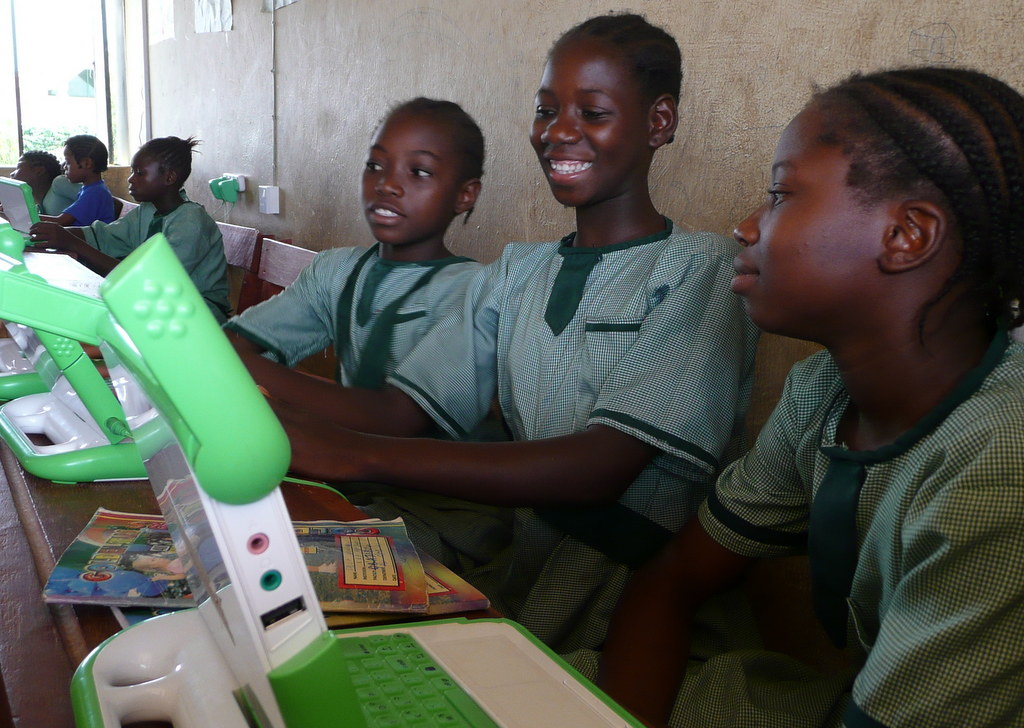
Photo by Carla Gomez Monroy
Growing up as a teenager in Nigeria, the digital world felt completely out of reach for me. I never had any interactions with a personal internet connected device until the late age of seventeen, when I finally held my first smartphone. Though this came a while later to me than others, I was elated and it opened up a digital realm previously only whispered about by my peers. At school, my passion for literature thrived, helped by the quiet absence of digital distractions. However, each holiday, upon returning to my home, I found myself lost in my friends’ conversations, which were full of exchange of memes, movies and digital trends that remained utterly foreign to me. I carried a sense of pride in my literary pursuits, yet felt a sharp pang of disconnection from them as a consequence of carefully negotiated parental control. My experience illustrates the uneven playing field that exists for young Nigerians in the digital age. While some children are digital natives, navigating online platforms from a young age, others face significant barriers to access and participation.This personal reflection, common to many Nigerian youths, encapsulates the complex relationship between young children and the internet in Nigeria. While the digital revolution has brought unprecedented opportunities, it has also unveiled the differences and challenges, particularly for the most vulnerable members of society. The Nigerian digital divide Nigeria, popularly known as the ‘Giant of Africa’ is a country of great diversity and cultures, with over 250+ ethnicities. Due to the presence of many different cultures,languages and religions Nigeria is a populated country. Due to its population there is a stark contrast between urban and rural landscapes. This difference is mirrored in the access to and utilization of digital technologies both by Children, Adults and even elderly people. The Urban areas, with their busy commercial centers and developed infrastructure, boast of a higher concentration of internet connectivity, technological devices, and digital literacy than its rural counterparts. Children in these urban areas are more likely to have early exposure to smartphones, tablets, and computers, integrating online activities into their daily lives. They use the internet for education, entertainment, social interaction, and increasingly, to express their creativity if they have any. In stark contrast, rural areas often struggle with limited or zero to none internet access, inadequate infrastructure, and a lack of resources. Children in these regions may have little to no exposure to digital technologies, which in turn widens the gap in opportunities and skills. The digital divide is not merely a matter of access; it also encompasses disparities in the quality of access, affordability, and the availability of relevant content. Smartphone Penetration Among Children in nigeria The Nigerian Communication Commission provides valuable insights into children’s internet use across various communities in Nigeria, in their article Young Children And Digital Technology: A Survey Across Nigeria. According to their research, smartphone penetration among children in Nigeria is increasing rapidly, although significant disparities remain.- A significant percentage of children in urban areas own or have access to smartphones and is higher than those in the rural areas. It was recorded that 45% of 4-10 year olds go online with their own mobile devices in the urban areas.
- Smartphone penetration in rural areas is considerably lower, although it is also on the rise. Children in these areas may have limited access to smartphones, often shared among family members or accessed through community resources.
- The age of first smartphone use is decreasing, with many children gaining access to these devices at increasingly younger ages. This early exposure presents both opportunities and challenges.









Leave A Comment